New York Style Pumpernickel Sourdough Bagels
What happens when New York deli nostalgia collides with old-world sourdough fermentation? You get the bagel of your dreams—dark, chewy, malty, tangy, and just the right amount of bold. These New York Style Pumpernickel Sourdough Bagels are my love letter to every Jewish bakery I’ve ever stepped foot in—and a tribute to how deep flavor and simple ingredients can turn a humble breakfast into an unforgettable experience.
If you’ve ever stood in line at Katz’s or Russ & Daughters with a hot bagel in hand, wondering if you could ever make something that good at home… this is your sign. Let’s get into it.
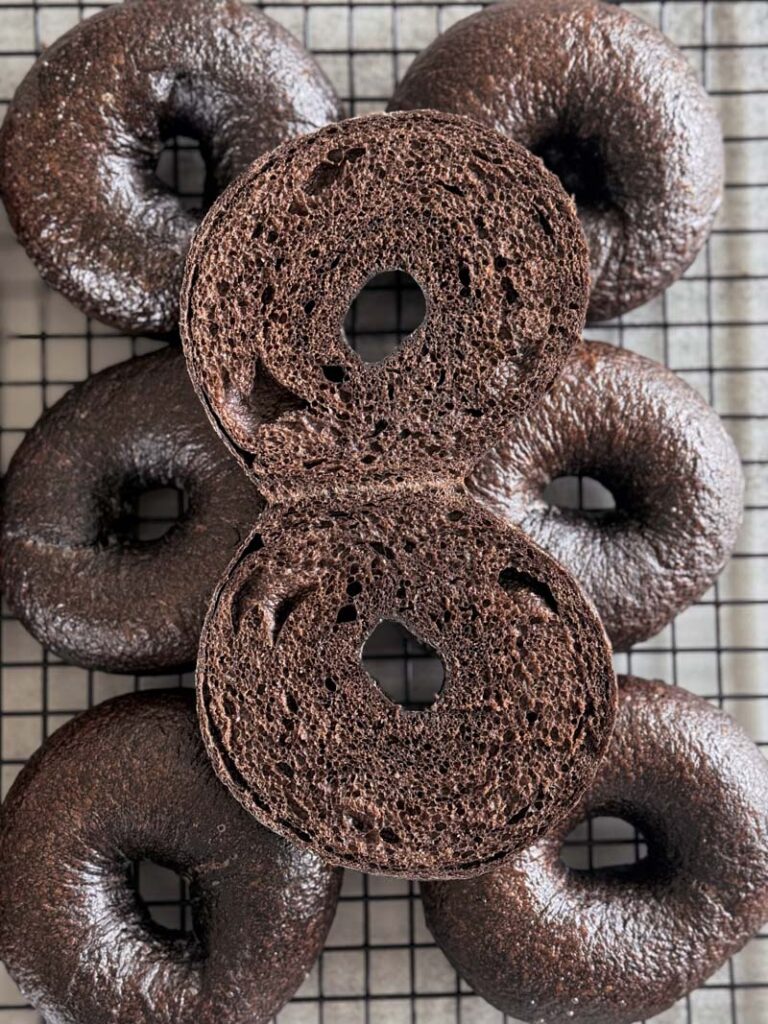
Why This Recipe Works
These pumpernickel sourdough bagels aren’t your average bagels. This dough is enriched with black cocoa, whole rye flour, molasses, and honey—giving it that signature dark color and sweet-earthy complexity. And thanks to a fermented stiff starter, we’re keeping this classic naturally leavened with a deeply flavorful, digestible twist.
Here’s what makes them stand out:
- Stiff sourdough starter: Encourages a tighter crumb and that signature chew.
- Rye flour + cocoa powder: A classic combo for pumpernickel flavor and color.
- Molasses & honey: Sweetens the deal with caramel depth.
- Boiled in honey and baking soda water: A proper New York-style boil that locks in shine and chew.
What Is a Pumpernickel Bagel, Anyway?
If you’ve never had a pumpernickel bagel, think of it like a bagel’s moodier, more mysterious cousin. Traditionally made with rye flour and molasses, pumpernickel bagels have a hint of bitterness balanced by a touch of sweetness. The black cocoa here doesn’t make them chocolatey—it just gives them that deep, signature color and a slightly smoky richness.
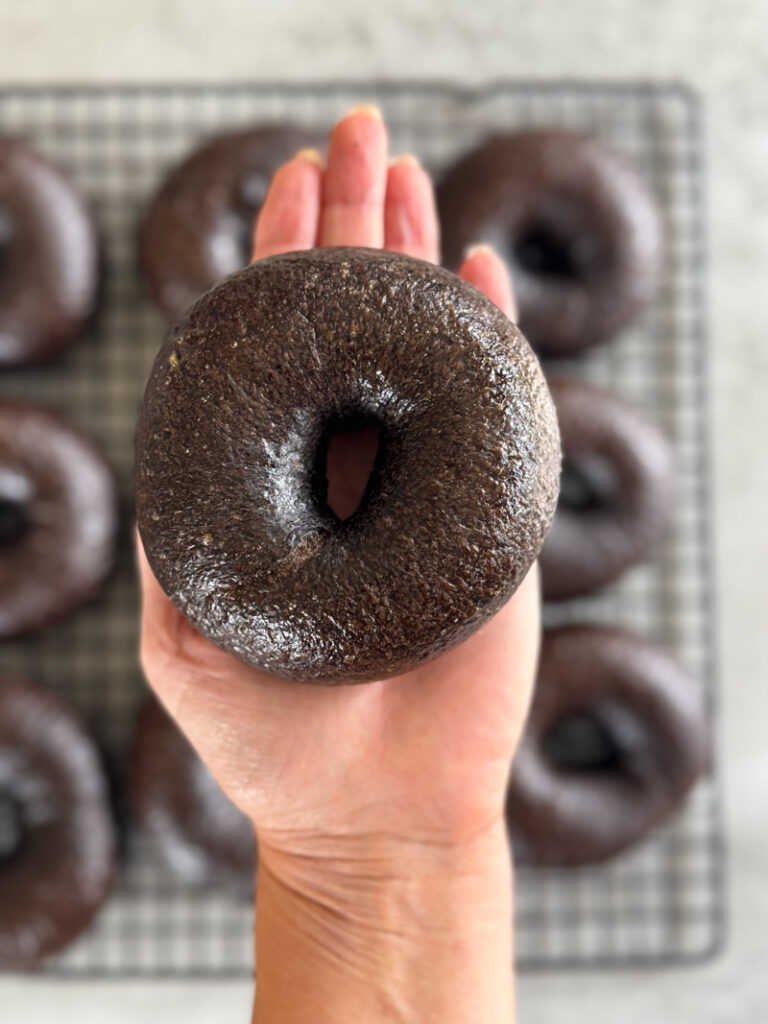
Ingredients You’ll Need
For the Stiff Starter (prepare the night before)
- 150g bread flour
- 100g water
- 25g active sourdough starter
For the Pumpernickel Sourdough Bagels
- 350g bread flour
- 310g water
- 250g stiff starter
- 100g whole rye flour
- 25g black cocoa powder
- 30g molasses
- 30g honey (or sub more molasses for extra depth)
- 12g salt
- 7g caraway seeds (optional but traditional)
For the Bath (yup, they’ll need a bath)
- 2 liters water
- 25g honey
- 10g baking soda
Tools You’ll Need
- Digital kitchen scale (don’t wing this, bagels are precise)
- Stand mixer with paddle and hook
- Mixing bowl
- 5qt Soup Pot
- Slotted spoon or skimmer
- Baking tray
- Parchment paper squares
How to Make Pumpernickel Sourdough Bagels
1. Build Your Stiff Starter (Night Before)
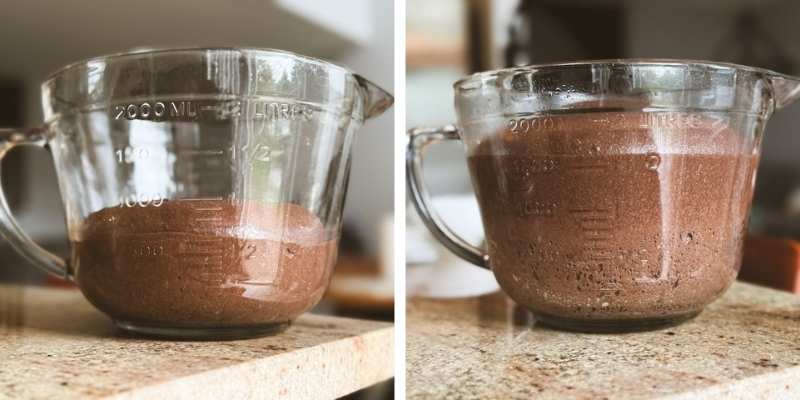
In a small bowl, mix 25g of your sourdough starter (this can be discard or active) with 100g of water. Stir to dissolve the starter. Then add 150g of bread flour and mix until everything is well combined. It’ll be thick like a dough ball—that’s what you want! Cover and leave at room temperature overnight. By morning, it should be more than double in size, puffed up, smell tangy, with a slight dome. This is your “powerhouse” for the next day.
2. Mix the Dough
Into your stand mixer bowl, add:
- Water, honey, molasses, and stiff starter first. Give it a quick swirl with a spoon to break up the starter.
- Then add your rye flour, black cocoa powder, caraway seeds (if using), and salt.
Turn the mixer on its lowest speed with the paddle attachment. Start slowly adding your bread flour, bit by bit, until it becomes too stiff for the paddle. Then switch to the dough hook. It should look like a very thick, shaggy dough at this point.
Let it mix for 2 more minutes just to bring everything together. Turn off the mixer and let the dough rest for 30 minutes.
After 30 minutes, turn the mixer back on, this time to a slightly higher speed (think medium-low), and mix for 7 minutes. You’re looking for a smooth, elastic dough. It should feel strong, not sticky, and bounce back when poked.
3. Bulk Fermentation
You can leave the dough in your mixer bowl or transfer to a different bowl. Lightly oil a bowl, place the dough inside, and cover it with a towel or plastic wrap. Let it sit in a warm area until it doubles in size. This can take 4–6 hours depending on your room temperature.
4. Divide and Pre-Shape
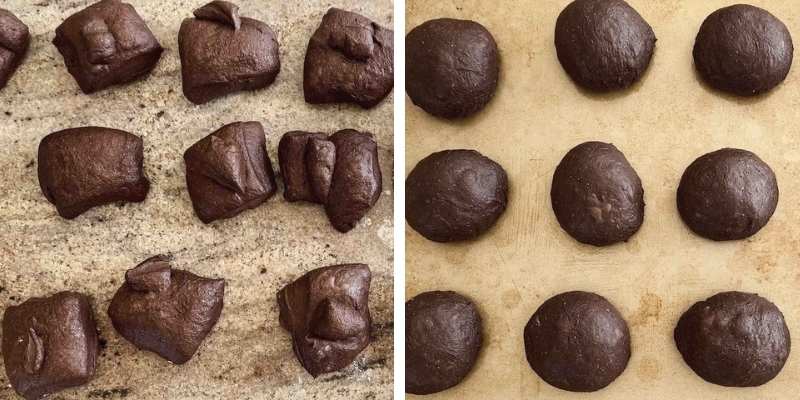
Once doubled, gently hoax the dough out of the bowl onto a clean, lightly floured surface. Use your scale to divide it into equal pieces: 108g for 10 bagels or 135g for 8 larger ones.
Shape each piece into a tight round ball. Cup your hand over the dough and move it in a circular motion on the table to create surface tension. Cover the dough balls with plastic wrap or a damp towel and let them rest for 1 hour. This makes them easier to shape later.
5. Shape your Pumpernickel Sourdough Bagels
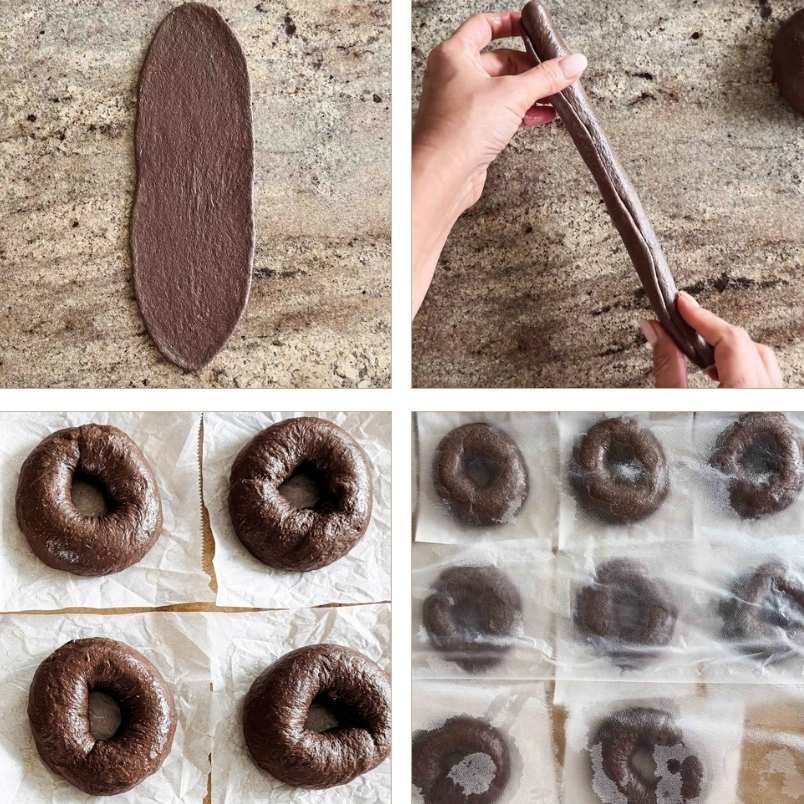
Time for fun! Take one dough ball and flip it upside down (the seam side is now up). Press it or use a rolling pin to roll out into a flat, oblong disc. Roll it into a log tightly lengthwise. Pinch the the seam together.
Now, wrap the dough around your hand, like you’re putting on a dough bracelet. Unwrap one end and insert the other end in about an inch and wrap around it, pinching the seam together. Roll it gently against the counter to seal. You’ve got a bagel!
Place each shaped bagel on a parchment square sprayed with oil spray and arrange them on a baking sheet. Lightly spray the tops with oil and cover the whole sheet with plastic wrap.
6. Cold Fermentation
Put your baking sheet in the fridge for overnight (or up to 24 hours) cold fermentation. This not only develops amazing flavor, but also makes the bagels easier to handle when boiling. If you’re in a rush, and want to bake your bagels same day, skip refrigeration and let them proof at room temperature for about 2 hours until they are slightly puffy.
7. Boil and Bake
Preheat your oven to 425°F (220°C). Bring a 5 qt or larger pot of water to a boil on high heat. Once boiling, reduce the heat to medium high, a gentle boil, and add honey and baking soda.
Take your cold bagels straight from the fridge (or if you did not refrigerate them, once they slightly puffed up on the counter). Carefully lift them by the parchment square and gently lower them into the water upside down, so the parchment paper is on top. Carefully peel off the parchment with tongs. Boil 1 minute per side. Do 3 bagels at a time.
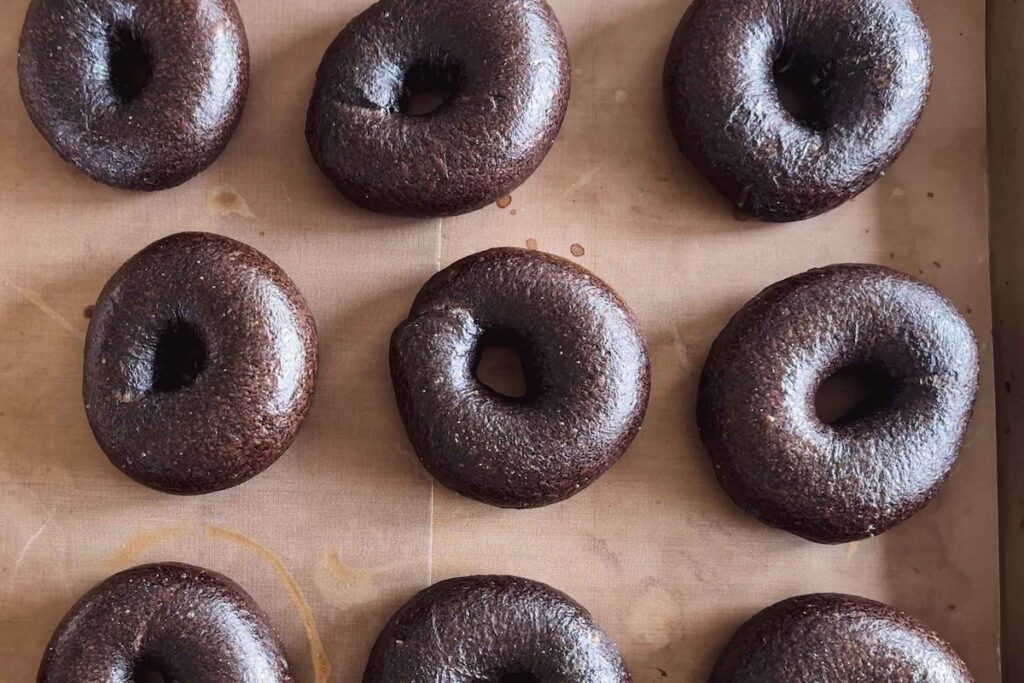
After boiling for 1 min on each side, transfer them to a greased, parchment-lined baking tray using a skimmer or strainer spoon. Once all bagels have been boiled and lined on baking sheet, use an egg wash to brush on top for that extra glossy shine. Just whisk 1 egg with 1 Tbsp of water. Bake for 20 minutes until beautifully browned and your kitchen smells like heaven.
Best Pumpernickel Bagel Toppings & Sandwich Ideas
One of the best things about pumpernickel sourdough bagels is how versatile they are when it comes to toppings—they pair beautifully with both sweet and savory toppings. Here are a few ideas to get your creativity flowing:
Savory
- Cream cheese + lox + red onion + capers (my FAVE!!)
- Egg salad or tuna salad with microgreens
- Turkey, Swiss cheese, grainy mustard
- Hummus + roasted red peppers + arugula
- Smashed avocado + feta + pickled onion
Sweet
- Whipped honey butter + sea salt
- Cream cheese + fig jam
- Peanut butter + banana
- Nutella (or Pistachio butter) + strawberries (don’t knock it till you try it!)
How to Store and Freeze Bagels
Short-Term: Want to keep them fresh for a couple days? Store in a ziplock bag at room temperature, but lightly toast before eating for best texture.
Freezer: Once fully cooled, slice the bagels in half and freeze in a ziplock bag. To reheat, just pop the frozen halves straight into the toaster—no need to thaw.
Fun Fact: The New York Pumpernickel Legacy
Did you know that the pumpernickel bagel didn’t show up in New York until after Jewish immigrants brought their rye breads from Eastern Europe? The original “pumpernickel” was a dense, slow-baked German rye bread. Bagel makers adapted this into a uniquely American hybrid using rye flour, cocoa, and molasses to mimic the color and complexity—et voilà, the New York pumpernickel bagel was born.
It’s one of the only bagels that manages to taste nostalgic, hearty, sweet, and tangy all at once. You’re not just biting into a bagel—you’re biting into a bite of immigrant culinary history.
Final Thoughts…
This pumpernickel sourdough bagels recipe might just ruin store-bought bagels for you forever—and I say that with pride.Every bite carries the richness of rye, the deep hum of molasses, and that unmistakable sourdough tang. You’ll feel like a NYC bagel boss after making these, minus the subway stress.
If you give these bagels a try, leave a comment. And if you’re here to learn, grow, and bake your heart out… you’re in the right place.
Happy bageling! 🖤🥯
New York Style Pumpernickel Sourdough Bagels
Ingredients
Method
- In a small bowl, mix 25g of your sourdough starter (this can be discard or active) with 100g of water. Stir to dissolve the starter. Then add 150g of bread flour and mix until everything is well combined. It’ll be thick like a dough ball—that’s what you want! Cover and leave at room temperature overnight. By morning, it should be more than double in size, puffed up, smell tangy, with a slight dome. This is your “powerhouse” for the next day.
- Mix the Dough
- Into your stand mixer bowl, add:
- Water, honey, molasses, and stiff starter first. Give it a quick swirl with a spoon to break up the starter.
- Then add your rye flour, black cocoa powder, caraway seeds (if using), and salt.
- Turn the mixer on its lowest speed with the paddle attachment. Start slowly adding your bread flour, bit by bit, until it becomes too stiff for the paddle. Then switch to the dough hook. It should look like a very thick, shaggy dough at this point.
- Let it mix for 2 more minutes just to bring everything together. Turn off the mixer and let the dough rest for 30 minutes.
- After 30 minutes, turn the mixer back on, this time to a slightly higher speed (think medium-low), and mix for 7 minutes. You’re looking for a smooth, elastic dough. It should feel strong, not sticky, and bounce back when poked.
- You can leave the dough in your mixer bowl or transfer to a different bowl. Lightly oil a bowl, place the dough inside, and cover it with a towel or plastic wrap. Let it sit in a warm area until it doubles in size. This can take 4–6 hours depending on your room temperature.
- Once doubled, gently hoax the dough out of the bowl onto a clean, lightly floured surface. Use your scale to divide it into equal pieces: 108g for 10 bagels or 135g for 8 larger ones.
- Shape each piece into a tight round ball. Cup your hand over the dough and move it in a circular motion on the table to create surface tension. Cover the dough balls with plastic wrap or a damp towel and let them rest for 1 hour. This makes them easier to shape later.
- Time for fun! Take one dough ball and flip it upside down (the seam side is now up). Press it or use a rolling pin to roll out into a flat, oblong disc. Roll it into a log tightly lengthwise. Pinch the the seam together.
- Now, wrap the dough around your hand, like you’re putting on a dough bracelet. Unwrap one end and insert the other end in about an inch and wrap around it, pinching the seam together. Roll it gently against the counter to seal. You’ve got a bagel!
- Place each shaped bagel on a parchment square sprayed with oil spray and arrange them on a baking sheet. Lightly spray the tops with oil and cover the whole sheet with plastic wrap.
- Put your baking sheet in the fridge for overnight (or up to 24 hours) cold fermentation. This not only develops amazing flavor, but also makes the bagels easier to handle when boiling. If you’re in a rush, and want to bake your bagels same day, skip refrigeration and let them proof at room temperature for about 2 hours until they are slightly puffy.
- Preheat your oven to 425°F (220°C). Bring a 5 qt or larger pot of water to a boil on high heat. Once boiling, reduce the heat to medium high, a gentle boil, and add honey and baking soda.
- Take your cold bagels straight from the fridge (or if you did not refrigerate them, once they slightly puffed up on the counter). Carefully lift them by the parchment square and gently lower them into the water upside down, so the parchment paper is on top. Carefully peel off the parchment with tongs. Boil 1 minute per side. Do 3 bagels at a time.
- After boiling for 1 min on each side, transfer them to a greased, parchment-lined baking tray using a skimmer or strainer spoon. Once all bagels have been boiled and lined on baking sheet, use an egg wash to brush on top for that extra glossy shine. Just whisk 1 egg with 1 Tbsp of water. Bake for 20 minutes until beautifully browned and your kitchen smells like heaven.

My dough is a little sticky. Waiting for shaping.
Once the dough is refrigerated overnight, it is a little easier to handle, when shaping, use some oil on your hands.
Can’t wait to try these! Can I sub unbleached all purpose flour for the bread flour?
Yes, you absolutely can!
Can I substitute a light rye flour for this recipe. If so, what adjustments should I make?
Yes, you can substitute with light rye, but adjust hydration a little bit. Subtract 10-20gr of water from the recipe.
I just used this recipe and the bagels turned out excellent! They taste like they are from a bagel bakery! I put a little cornmeal on the bottom of mine to add extra texture.
So happy you loved them, they are a staple in my home.
Do you have a suggestion on how to make these without a sourdough starter? Can I use yeast with the flour and water to create a sponge, leaving it overnight?