The Best Sourdough Discard Crepes
Crepes have been part of my life for as long as I can remember. Growing up, they showed up on the table regularly — thin, tender, and endlessly adaptable depending on what was in the kitchen that day. So when I got deep into sourdough baking, it was really only a matter of time before I started looking for ways to bring the two together.
The challenge with sourdough discard is that it accumulates fast, and I’m always on the lookout for recipes that use a meaningful amount of it — not just a few tablespoons stirred into something for a vague hint of tang. This recipe uses 2½ cups, which is the kind of quantity that actually makes a dent. And the result? These are honestly the best crepes I’ve ever made. The discard gives them a depth of flavor that plain crepe batter just doesn’t have — slightly nutty, gently tangy, and complex in a way that makes people ask what’s different about them.
The best part is how they come together: everything goes into a blender, you press a button, and you have a perfectly smooth batter in about two minutes. No whisking, no lumps, no fuss. This is now the only way I make crepes.
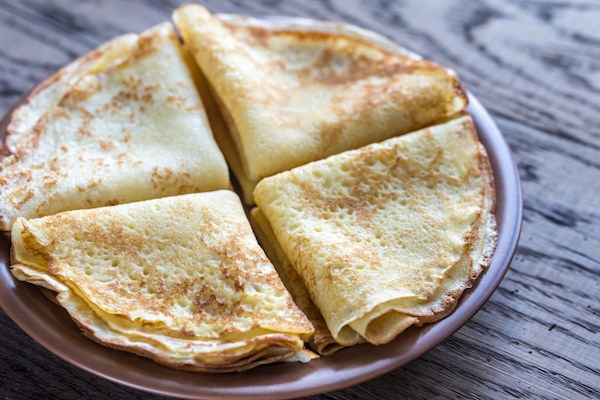
One important note before you get started: use discard that’s no more than a couple of weeks old. Older discard can have a sharp, overly sour flavor that will come through in something as delicate as a crepe. I actually love making these with fresh starter that I’ve bulked up on purpose — I’ll feed Phoebe a larger amount than usual, knowing I’m going to use the extra for crepes within a few days. It’s a great way to plan ahead and always have a reason to feed your starter generously.
And the strawberry sauce? Non-negotiable, especially when strawberries are in season. There’s nothing quite like a warm, jammy homemade strawberry sauce spooned over a stack of these. It’s the combination that started this whole obsession, and I think once you try it, you’ll understand.
What Are Sourdough Discard Crepes?
Crepes are the elegant, low-key cousin of the pancake — thinner, more flexible, and endlessly versatile. Where a pancake wants to stand on its own, a crepe wants to be filled, folded, rolled, or drizzled. Classic French crepes are made with flour, eggs, milk, and butter. Sourdough discard crepes swap out the flour in favor of your discard, which brings its own natural starch structure to the batter — no added flour needed, which makes these fermented, gut healthy, and easily digestable.
What makes this version different from the dozens of discard crepe recipes out there is the ratio: this recipe uses a generous 2½ cups of discard. That’s not a typo, and it’s not an accident. More discard means more complex flavor, more tender texture from the acidity, and — honestly — a better use of that jar that’s been staring you down in the fridge. The eggs and baking soda round everything out, giving you a crepe that’s thin and lacey but still sturdy enough to hold your fillings without tearing.
These crepes work beautifully sweet and savory, which makes them one of the most practical recipes in the sourdough discard repertoire.
Why You’ll Love This Recipe
- Uses a full 2½ cups of discard — finally, a recipe that actually puts a dent in your jar. No more guilt about what’s piling up in the fridge.
- Ready in under 30 minutes — the batter comes together in about five minutes, and once your pan is hot, crepes cook fast.
- No added flour needed — the discard provides all the structure you need, which means one less ingredient and one less measuring cup to wash.
- Works for any meal of the day — sweet or savory fillings make this genuinely useful morning, noon, and night.
- The strawberry sauce alone is worth it — make a batch, and you’ll find yourself putting it on everything.
- Flexible for your schedule — the batter can be made ahead and stored in the fridge for up to 48 hours, ready to cook whenever you are.
- That sourdough tang — there’s a subtle, slightly nutty depth of flavor in these crepes that regular crepes simply can’t touch.
Ingredient Breakdown
The Discard — 2½ cups
This is the backbone of the recipe, and the quantity here is intentional. Two and a half cups of discard gives these crepes real flavor — not just a background whisper of sourdough, but a genuine, slightly tangy character that makes them taste like something you’d find at a very good brunch spot.
A note on consistency, because it matters: This recipe is written for thick discard — the kind that holds its shape a bit when you scoop it, somewhere in the texture range of thick pancake batter or Greek yogurt. If your discard is thinner and more pourable (which can happen if it’s been sitting for a while or if you maintain a higher-hydration starter), reduce the milk to ½ cup rather than the full 1 cup. The goal is a batter that pours like heavy cream — fluid and easy to swirl, but not watery.
Can you use it straight from the fridge? Yes — and this is one of the most liberating things about discard recipes. You don’t need to feed your starter before making these or wait for it to come to room temperature. Cold discard, pulled straight from the fridge, works perfectly well here.
Milk — 1 cup for thick discard / ½ cup for runny discard
Milk thins the batter and adds a subtle richness. Whole milk gives you the creamiest result, but 2% or any plant-based milk (oat milk works especially well) are all fine substitutions. The key is using the right amount for your discard’s consistency — trust your eyes over the clock. The batter should swirl easily across the pan when you tilt it.
Eggs — 4 large
Eggs do a lot of work in crepe batter. They bind everything together, add structure so the crepes don’t tear when you flip them, and contribute to that beautiful golden color at the edges. Don’t be tempted to reduce the eggs — with this much discard in the batter, you need all four.
Sugar, Honey, or Maple Syrup — 2 tablespoons
This small amount of sweetener isn’t just for flavor — it also helps the crepes develop those gorgeous lacy, golden-brown edges in the pan. Use granulated sugar for a neutral base, honey for a subtle floral note, or maple syrup for a warm, caramel-like undertone.
Avocado Oil (or other neutral oil) — ¼ cup
Oil in the batter keeps the crepes from sticking and contributes to their silky, tender texture. Avocado oil is the first choice here because its neutral flavor doesn’t compete with the sourdough or your fillings. Avoid strongly flavored oils like extra-virgin olive oil, which can taste a little heavy in a delicate crepe.
Baking Soda — ½ teaspoon
This is the secret weapon that most sourdough discard crepe recipes don’t include. The baking soda reacts with the natural acids in your discard to give a very gentle lift — not enough to make these fluffy like a pancake, but enough to keep them from tasting flat or overly sour, plus it adds those lacy holes throughout. It also helps neutralize any sharper acidity in older discard, which means you can use discard that’s been in the fridge for several days and still get a balanced, pleasant flavor.
Salt — 1 teaspoon
Non-negotiable. Salt brings every other flavor into focus. Without it, these crepes will taste muted and oddly flat. Don’t skip it, even when making sweet crepes.
Step-by-Step Directions
Step 1: Blend the Batter
Add all the ingredients to a blender — discard, eggs, sweetener, avocado oil, baking soda, salt, and milk (full cup for thick discard, half cup for runny discard). Blend for 10-15 seconds until completely smooth. That’s it. Two minutes from fridge to ready-to-cook batter, no whisking required.
The batter should look thin and silky — somewhere between the consistency of heavy cream and whole milk. It should pour freely when you tilt the blender. If it’s thicker than that, add milk a splash at a time and pulse again. If it seems too thin and watery, you may have used a very runny discard — that’s fine, it will still work, just be extra decisive when swirling the pan.
Pro Tip: Pour the finished batter directly into a large measuring cup or mason jar. It makes pouring into the pan much cleaner and more controlled, and if you’re storing the batter, the jar goes straight into the fridge with a lid.
Pro Tip: You can make this batter up to 48 hours ahead and refrigerate it. Give it a good shake or stir before cooking, as it will settle slightly. Add a small splash of milk if needed to bring it back to the right consistency.
Step 2: Let the Batter Rest (Optional, But Worth It)
If you have 20-30 minutes, let the batter rest at room temperature before cooking. This gives the gluten time to relax (yes, there’s gluten in the discard), which results in smoother, more supple crepes that swirl more easily in the pan. If you’re using batter that’s been chilling in the fridge overnight, let it sit on the counter for about 20 minutes before cooking.
If you’re in a rush, you can go straight to cooking — these crepes are forgiving enough that skipping the rest won’t ruin them.
Step 3: Heat Your Pan
A 10-inch nonstick, lightly seasoned and well heated pan is ideal for crepes. Place it over medium heat and let it fully preheat before you spray lightly with oil spray, then add batter. This is not a step to rush — a properly heated pan is what gives you crepes with beautifully defined, lacy edges rather than pale, doughy ones.
Watch Out: If the pan is too hot, the batter will seize the moment it hits the surface and you won’t be able to swirl it thin. Test the temperature by flicking a tiny drop of water into the pan — if it skips and evaporates within a second or two, you’re at the right heat. If it sizzles immediately and violently, let the pan cool slightly.
Lightly spray the pan with oil spray. You shouldn’t need to re-grease between every single crepe once the pan is seasoned and you’re in a rhythm, but do spray every 3-4 crepes to keep things from sticking.
Step 4: Cook the Crepes
Pour approximately ¼ cup of batter into the center of the pan. Immediately pick up the pan and tilt it in a slow, circular motion so the batter spreads into a thin, even layer across the entire bottom. You want to work quickly here — the batter starts setting almost as soon as it hits the pan.
Cook on the first side for about 1 to 1½ minutes. Watch for these cues: the edges will begin to look dry and pull away slightly from the sides of the pan, and the top surface will go from shiny and glossy to a matte, set appearance. That matte look is your flip signal.
Pro Tip: The first crepe is almost always a sacrifice. Don’t panic if it comes out ragged, thick in the middle, or sticks. It’s doing its job — calibrating your pan temperature and your swirling technique. Eat it straight from the pan with a sprinkle of sugar and call it the cook’s tax.
Slide a thin spatula under the crepe and flip quickly. Cook the second side for just 15-30 seconds — it won’t look as golden as the first side, and that’s fine. Slide it onto a plate, brush very lightly with melted butter or a quick light oil spray so the next crepe doesn’t stick when stacked, and continue with the remaining batter.
Stack finished crepes directly on top of each other. Cover the stack with a clean kitchen towel to keep them warm and pliable while you finish cooking.
Step 5: Fill and Serve
This is where you get to have some fun. See the filling guide below for both sweet and savory ideas — or go straight to the strawberry sauce recipe, which is, in Elena’s house, the default choice for a reason.
Sweet Filling Ideas
Sourdough discard crepes have just enough tang to make sweet fillings taste more complex and interesting than they would on a plain crepe. The slight acidity acts a little bit like a squeeze of lemon — it brightens everything and keeps sweetness from feeling one-dimensional.
Fresh Strawberry Sauce (recipe below) — This is the one. Spoon it generously over folded crepes and finish with lightly sweetened whipped cream or sour cream.
Lemon and Powdered Sugar — The simplest and most classic French combination. Squeeze half a lemon over a warm crepe, dust generously with powdered sugar, and fold into quarters. Nothing else needed.
Nutella and Banana — Spread a thin layer of Nutella, lay in a few slices of ripe banana, roll up, and dust with powdered sugar. A crowd-pleaser for all ages.
Whipped Cream and Fresh Berries — Fold a crepe in half, open it like a little pocket, and spoon in freshly whipped cream and a mix of whatever berries look good. A small drizzle of honey over the top is optional but lovely.
Brown Butter and Cinnamon Sugar — Cook butter until it smells nutty and turns a deep golden color. Brush it over a warm crepe, sprinkle with cinnamon sugar, and fold into quarters. This is the one you make when you want something simple to feel special.
Apple Compote — Sauté diced apple in butter with brown sugar, cinnamon, and a tiny pinch of cardamom until soft and glossy. Spoon over crepes and add a dollop of sour cream or crème fraîche for contrast.
Honey and Ricotta — Spread a thin layer of whole-milk ricotta (seasoned with a pinch of salt and a splash of vanilla), fold the crepe into quarters, and drizzle with warm honey. Add a few crushed walnuts if you want some texture.
Savory Filling Ideas
The 2 tablespoons of sweetener in this batter is subtle enough that these crepes work beautifully with savory fillings — the slight sweetness actually plays well against salty, savory ingredients the way it does in many French dishes.
Ham and Gruyère — Layer thin slices of good deli ham and shredded Gruyère over a crepe in the pan, then fold it in half and let it sit over low heat for a minute until the cheese melts. A classic.
Spinach, Egg, and Feta — Sauté baby spinach with a little garlic until wilted. Spread over a crepe, crumble feta over the top, and fold. For a heartier version, add a fried or soft-scrambled egg in the center before folding.
Smoked Salmon and Cream Cheese — Spread a thin layer of cream cheese, lay on slices of smoked salmon, add thin-sliced red onion and a few capers, and fold into quarters. A teaspoon of chopped fresh dill over the top makes this feel genuinely restaurant-quality.
Mushroom and Herb — Sauté sliced cremini mushrooms in butter with thyme and a splash of white wine or vegetable broth until golden. Season well with salt and pepper. Fold into crepes and top with a small spoonful of crème fraîche.
Chicken, Spinach, and Sun-Dried Tomato — A great way to use leftover rotisserie chicken. Shred the chicken and warm it with wilted spinach and chopped sun-dried tomatoes. Add a little grated parmesan and fold into crepes. This is a full dinner, not just a snack.
Brie and Roasted Tomato — Lay a few slices of brie on a warm crepe and let them begin to melt. Add halved cherry tomatoes that have been roasted with olive oil and salt until jammy. Fold and serve immediately with fresh basil.
Fresh Strawberry Sauce
This is Elena’s favorite way to eat these crepes, and once you make it, you’ll understand why it becomes a weekly staple. It takes about 10 minutes, uses simple ingredients, and produces a sauce with the kind of deep, jammy strawberry flavor that makes everything taste like summer.
This sauce keeps in the fridge for up to two weeks and is genuinely dangerous to have around. It’s equally good on yogurt, waffles, ice cream, or eaten by the spoonful over the kitchen sink. No judgment.
Strawberry Sauce Ingredients
- 2 cups fresh strawberries, hulled and quartered (or chopped if large)
- 1/4 cup granulated sugar (adjust to taste depending on berry sweetness)
- 1 tablespoon fresh lemon juice
Optional: 1 teaspoon cornstarch mixed with 1 tablespoon cold water if you prefer a thicker, glossier sauce.
How to Make the Strawberry Sauce
Combine the strawberries, sugar, and lemon juice in a small saucepan over medium heat. Stir to coat the berries in the sugar. Bring to a low boil, add the cornstarch mixture (if using) and cook, stirring occasionally, for 5-7 minutes until the berries have broken down and released their juices and the mixture looks syrupy and jammy.
Stir in remaining 1 cup of fresh berries and remove from heat.
Let cool slightly before spooning over crepes. The sauce thickens as it cools and will keep in an airtight jar in the fridge for up to one week. Gently reheat in a small saucepan or briefly in the microwave before serving.
Pro Tip: This sauce works beautifully with frozen strawberries too — just cook them a few minutes longer to evaporate the extra liquid, also add the cornstarch. This means you can make it year-round, not just when fresh strawberries are at their peak.
How to Store and Freeze
At Room Temperature
Cooked crepes can sit at room temperature, stacked and covered with plastic wrap. They stay pliable and soft as long as they don’t dry out.
In the Refrigerator
Stack cooled crepes between layers of parchment paper or wax paper and store in an airtight container or wrapped tightly in plastic wrap. They’ll keep beautifully in the fridge for up to 4 days. Reheat briefly in a dry skillet over medium-low heat — about 30-45 seconds per side — or stack a few on a plate, cover with a damp paper towel, and microwave in 20-second bursts until warm. The skillet method gives you slightly better texture, but the microwave is perfectly serviceable for weekday mornings.
A note on sourdough and refrigeration: unlike a loaf of sourdough bread, which can turn stale or tough in the fridge, crepes actually hold up quite well because of their low moisture content and thin profile. No need to worry about the refrigerator ruining the texture here.
In the Freezer
Crepes freeze exceptionally well. Stack them with a small square of parchment paper or wax paper between each one (this prevents them from freezing into an inseparable block), then place the whole stack in a zip-top freezer bag or wrap tightly in plastic wrap and foil. Freeze for up to 2 months.
To thaw, move the entire stack to the fridge the night before, or thaw individual crepes at room temperature for about 15 minutes. Reheat in a skillet over medium-low heat. They’ll come back almost exactly as they were — tender, pliable, and ready for filling.
Batter storage: You can also store the uncooked batter in an airtight container in the fridge for up to 3 days, making it an excellent make-ahead option. Give it a good stir before cooking, and add a splash of milk if it’s thickened.
Troubleshooting
Problem: My crepes are tearing when I try to flip them. Why it happened: The batter may be too thin, the pan may not be hot enough, or the crepe may not be fully set on the first side. A crepe that isn’t ready to flip will tell you — it will stick and tear. Fix it: Let the crepe cook until you’re confident the top looks fully matte and dry before attempting the flip. If your batter seems too thin, add 2-3 tablespoons of additional discard or reduce milk slightly next time.
Problem: The batter isn’t spreading thin — it’s pooling in the center. Why it happened: The batter is too thick, or you’re not swirling fast enough. Fix it: Add milk a tablespoon at a time until the batter flows more freely. When you pour into the pan, work quickly and use confident circular wrist movements to swirl the pan.
Problem: My crepes taste too sour. Why it happened: Old or very acidic discard can tip the flavor over the edge, especially in a recipe with this much discard. Fix it: The baking soda in this recipe is specifically designed to neutralize some of that acidity, but if your discard is particularly old and pungent, consider using slightly fresher discard or increasing the baking soda to ¾ teaspoon. You can also add a little extra sweetener to balance the tang.
Problem: The crepes are sticking to the pan. Why it happened: The pan wasn’t hot enough before the batter went in, the oil in the batter wasn’t sufficient, or you’re using a pan that doesn’t have a good nonstick surface. Fix it: Make sure the pan is fully preheated before you pour. Add a small amount of butter or oil to the pan between every 3-4 crepes. A high-quality nonstick skillet makes a meaningful difference with crepes.
Problem: The first crepe is a mess. Why it happened: This is not a problem. This is a time-honored tradition. Fix it: Nothing. The first crepe is always a calibration crepe. Eat it, adjust your heat and technique, and move on. Every crepe baker in history has done this.
Frequently Asked Questions
Can I use sourdough discard straight from the fridge? Yes, absolutely. You don’t need to feed your starter before making this recipe or bring the discard to room temperature. Cold discard works perfectly well — you may just need to whisk the batter a little more thoroughly to incorporate it smoothly.
What if my sourdough discard is very runny? If your discard is on the thinner, more liquid side, use only ½ cup of milk instead of the full cup. The goal is a batter that pours like heavy cream. If you accidentally add too much milk and the batter looks very watery, add an extra tablespoon or two of discard to bring it back into balance.
Can I make the crepe batter ahead of time? Yes — and it’s one of the best things about this recipe. Make the batter the night before, cover tightly, and refrigerate for up to 3 days. In the morning, give it a good stir (and add a splash of milk if it’s thickened overnight) and you’re ready to cook immediately. This works especially well for weekend brunch when you want to be present with people instead of hovering over the stove.
Do I need a special crepe pan? No. A standard 10-inch nonstick skillet works beautifully. What matters more than the pan shape is that the surface is nonstick and that you preheat it fully before cooking.
Can I double or triple the recipe? Yes, and it’s worth doing if you’re feeding a crowd. The batter scales up very well. Cook crepes in batches and keep finished ones warm in a low oven (200°F/93°C) on a baking sheet, covered loosely with foil, until you’re ready to serve.
