Ingredients
Method
Step 1: Mix the wet ingredients
- In the bowl of your stand mixer, whisk together 100g (1/3 cup + 1 Tbsp) milk, 75g (6 Tbsp) sugar, 150g (2/3 cup) pumpkin purée, 1 egg, 100g (1/2 cup) sourdough discard, and 1 tsp instant yeast until smooth.
If you’re mixing with the machine, keep everything except the butter cold, straight from the fridge. Stand mixers generate a surprising amount of friction heat while kneading, and starting cold helps keep the dough from overheating before the butter is even incorporated.
Step 2: Bring the dough together
- Add 350g (2 3/4 cups) bread flour and mix just until a shaggy mass forms with no dry streaks left in the bowl. Cover and let it rest for 30 minutes.
Step 3: Knead and add salt
- Attach your dough hook or spiral attachment (depending on your mixer), add 7g (1 1/4 tsp) salt and mix on low-medium speed for 3-5 minutes.
Step 4: Work in the butter
- Turn the mixer up to medium-high and add 42g (3 Tbsp) soft butter in three separate additions, letting each one fully incorporate before adding the next. This takes about 10 minutes total. You’ll know you’re done when the dough clears the sides of the bowl and the butter has completely disappeared into it.
If the dough looks greasy or won’t stop sticking to the bottom of the bowl no matter how long you mix, it’s usually a sign the dough got too warm during kneading. Pop the bowl with the dough in the fridge for 30 minutes to firm back up, then continue.
Step 5: Bulk Ferment
- Cover the bowl and let the dough bulk rise by 50% at room temperature performing two rounds of stretch and folds spaced 30 minutes apart early in that window.
Transferring the dough to a glass measuring bowl at the start makes this much easier to track, since you can mark the dough level and watch it rise against a clear line.
Step 6: Make the filling
- When the dough has risen by about 50%, grab a small bowl and stir 200g (1 cup) brown sugar, 1 Tbsp cinnamon, and 85g (6 Tbsp) softened butter together until you have a smooth, spreadable paste.
Step 7: Roll, fill, & cut
- Turn the risen dough out onto a lightly floured counter and roll or press it into a neat 9×17-inch rectangle. Spread the cinnamon filling evenly over the entire surface, all the way to the edges. Using a pizza cutter, slice the dough into roughly 3×3-inch squares.
Step 8: Stack and pan
- Line a 9×5 loaf pan with parchment paper — this isn’t optional. Stack the squares on top of each other like a deck of cards, then tip the whole stack onto its side into the pan. Press down gently to settle everything and fill out the pan evenly.
Step 9: Final proof
- Cover the pan loosely and let it proof in a warm spot until it’s fully doubled in size. This second rise moves faster than bulk fermentation since the dough is already warm and active — keep an eye on it rather than setting a fixed timer.
Step 10: Bake
- Preheat your oven to 375°F (190°C). Right before it goes in, warm up 1/4 cup of heavy cream in the microwave for 10-15 seconds (just so it’s lukewarm and not refrigerator cold) and pour over the top of the loaf — this will completely transform the texture and flavor. Bake on the middle rack for about 40 minutes, until the top is a rich, even golden brown. Check at the 25-minute mark, and if it’s browning faster than the inside is cooking, loosely tent it with foil for the remainder of the bake.Let the loaf cool on a wire rack before icing it.
Step 11. Make the icing and finish
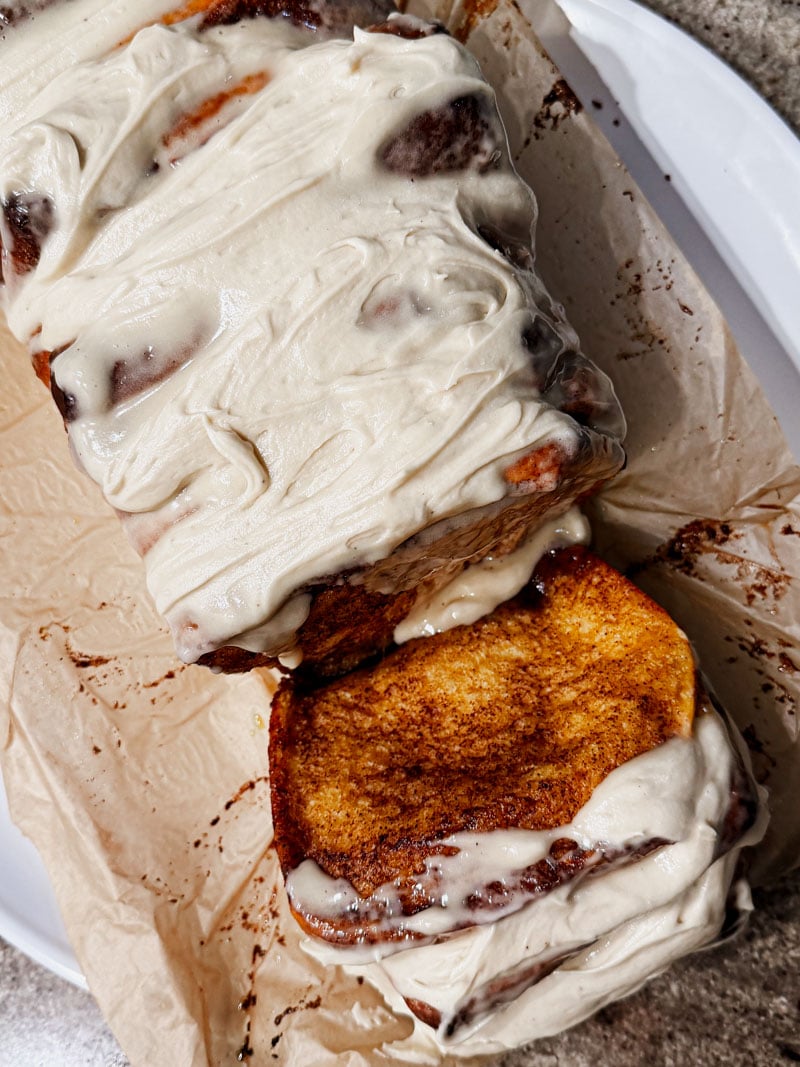
- Using a handheld mixer or a whisk, beat 57g (1/4 cup) softened butter, 113g (4oz) cream cheese, and 1/2 tsp vanilla together until smooth. Add (120g) 1 cup powdered sugar and beat until fluffy, then whisk in up to 60g (1/4 cup) milk or heavy cream just to loosen it to a soft, pourable consistency. Drizzle generously over the cooled loaf.
Pull your butter and cream cheese out for the icing at the same time you start working with the dough. By the time the loaf comes out of the oven and cools, they’ll be perfectly soft and ready to whip.