Ingredients
Method
Step-by-Step Instructions: From Mix to Golden Loaf
Mix the Dough
- In your bowl, combine the 350g water and 125g active starter. Stir until mostly dissolved—it’ll look cloudy and happy. Add the 500g bread flour and sprinkle 10g salt on top. Mix everything well for about 2 minutes until evenly combined and no dry flour bits or lumps remain. (I recommend mixing by hand, get to know the temperature and feel of the dough).
- Flatten and level the dough in your clear bowl, then note the starting volume (mine hit about 900ml). This is key for tracking rise later—no guessing!
- Cover and rest the dough for 1 hour. This short rest hydrates the flour and starts gluten development gently.
First Stretch and Fold + Rest
- Perform one set of stretch and folds: Wet your hands, reach under the dough, pull up gently, and fold over the center. Rotate the bowl and repeat 4-6 times until the dough starts to resist to being stretched. Cover and rest for 40 minutes.
Lamination: The Secret to Even Inclusions and Gorgeous Crumb
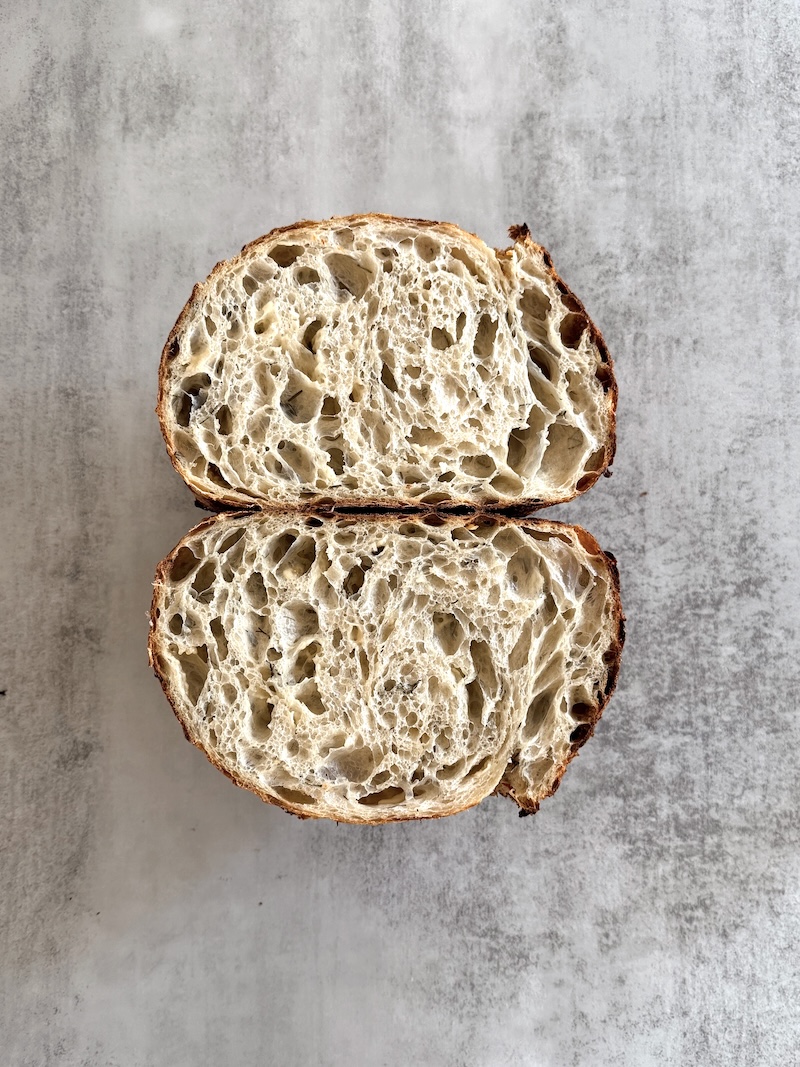
- Here’s where the magic partly happens—and why we do it. Lamination gently stretches the dough paper-thin (without tearing too much) to develop a strong, even gluten network. It traps tiny air pockets for a lighter, more open crumb and distributes add-ins like cheese and herbs perfectly so every slice has flavor bombs. No more clumpy pockets or weak spots—it’s like giving your dough a gentle yoga stretch for better structure!
- Lightly spray your clean countertop with water (this prevents sticking without adding extra flour). Turn out the dough and gently stretch it in every direction by slipping your fingers under the dough and stretching out gently with your fingertips until it’s thin, but stop before it tears excessively.
- Sprinkle the ⅓ cup chopped fresh dill evenly across the surface, followed by the 1 cup shredded or cubed sharp white cheddar. The cheese will melt into gooey pockets during baking—yum!
- Now fold: Bring the left side to the middle, then the right side over it (like a letter). Fold the top down to the middle, then the bottom up. Finally, fold the whole thing into a neat ball and pop it back into your measuring bowl.
Coil Folds and Bulk Fermentation
- Cover and rest for 40 minutes. Perform a set of coil folds: Wet hands, lift the center of the dough, and let the sides coil under themselves. Rotate and repeat until it forms a smooth ball. Rest another 40 minutes, then do one more set of coil folds.
- Now let the dough rise, covered, until it doubles in size (to about 1800ml in my bowl). At 73°F (23°C) in dry conditions.
- Temperature and humidity matter—here’s the pro tip: Use your bowl’s volume marks instead of the clock. In tropical, humid, warm climates? Aim for a 75% rise instead of double in size to avoid over-proofing. In cold kitchens, push bulk rise past double in size. This volume method lets you adjust based on your temperature until you find the perfect rise percentage. The percentage rise must be adjusted when seasons change as well.
Shaping and Cold Fermentation
- Once doubled, gently turn the dough out onto a very lightly floured counter. Pre-shape into a taut round ball using a bench scraper—pull the sides under to build surface tension. Let it rest (bench rest) for 15 minutes.
- Now final shape: Flip the dough seam-side up, gently flatten, fold left side to the middle, then right side, roll it up into something of a log. Place seam-side up into a flour-dusted, cloth-lined proofing basket. Rest 10 minutes, then stitch the seams closed if needed.
- Cover with plastic wrap or a damp towel and refrigerate for 8-24 hours. I cold-fermented mine for 12 hours—this slow proof develops incredible flavor and makes scoring easier.
Prepare for Baking: Scoring the Cold Dough
- Remove the proofing basket from the refrigerator. Gently turn the dough out onto a piece of parchment paper (seam-side down now).
- Using a sharp lame or razor blade, score the top. A simple single slash works beautifully. Scoring allows the bread to expand properly in the oven and creates that signature artisan look.
Baking – Two Reliable Methods
- Preheat your oven to 450°F (232°C).
Dutch Oven Method:
- Preheat your Dutch oven for 30–45 minutes. Carefully transfer the scored dough (still on parchment) into the hot pot. Cover and bake 20 minutes. Uncover and bake another 10–15 minutes until deep golden and the internal temperature reaches 198F. Total ≈35 minutes.
Open Baking Method:
- Preheat a baking stone or steel with a steam pan below. Slide the scored dough (on parchment) onto the stone, add steam (ice cubes or boiling water), and bake about 35 minutes, rotating halfway for even browning.
- Cool the loaf on a wire rack for at least 1 hour before slicing — this sets the crumb perfectly.